
Community Independence Training San Diego

All Services
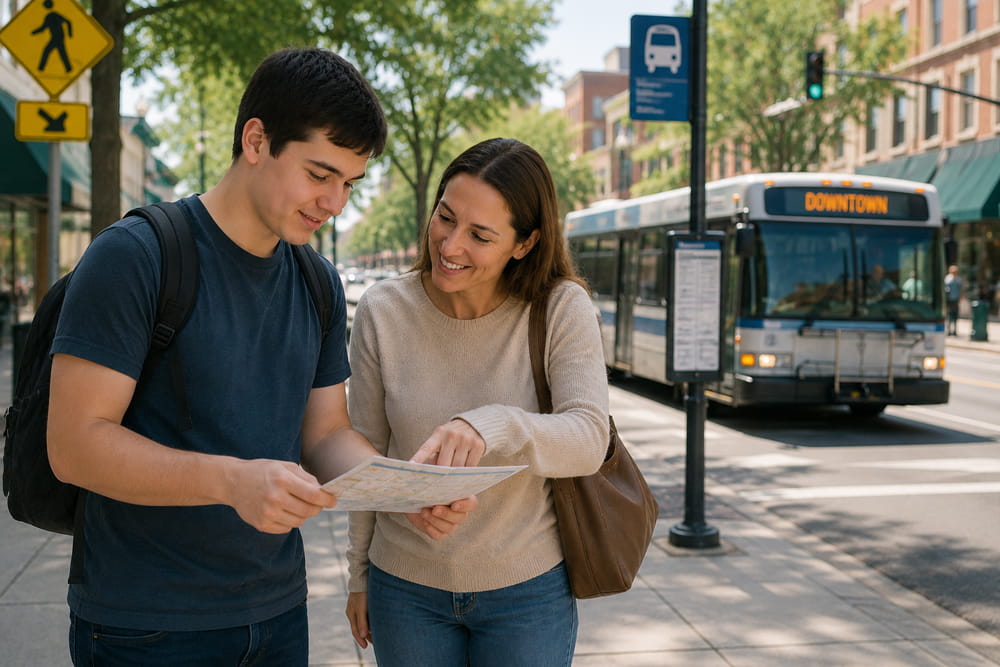
Being part of the community can mean many things. It may mean shopping at a neighborhood store, visiting the library, taking public transportation, ordering food, attending a local activity, or knowing what to do when plans change.
For autistic people, community independence is not about fitting into one narrow idea of how someone should act. It is about having more choice, confidence, safety, and control while moving through the world.
Alasi provides practical, nonmedical community independence support for autistic children, teens, adults, and aging adults throughout San Diego County. Our Autism Independence Specialists support each person in real settings, including their home, neighborhood, local businesses, and community spaces.
Skills are developed where they will actually be used. That may be a grocery store in Chula Vista, a library in North County, a walking route in La Jolla, a community activity in East County, or a familiar shopping center near Carmel Valley.
Every plan is shaped around the person’s goals, strengths, comfort, communication style, and support needs.
What Is Community Independence Support?
Community independence support helps autistic individuals build practical skills for participating in everyday life outside the home.
The exact goals will be different for every person. One autistic adult may want support learning a regular bus route. A teenager may want to learn to buy an item at a store. A younger child may begin by learning how to stay close to a trusted adult in a busy public setting.
Community independence may include support with:
- Planning and preparing for an outing
- Following a familiar route
- Crossing streets safely
- Using public transportation with support
- Shopping for groceries or personal items
- Ordering food at a restaurant or café
- Paying for purchases
- Asking an employee for help
- Recognizing community signs and landmarks
- Carrying identification or emergency information
- Using a phone for directions or communication
- Managing waiting, delays, or unexpected changes
- Participating in social, recreational, or community activities
- Communicating preferences, boundaries, and support needs
- Knowing when and how to ask for help
These skills can create more access to education, work, hobbies, relationships, and daily responsibilities. They can also help someone feel more prepared in familiar community settings.
Autism-Specific Support Makes a Difference
Many general home care agencies provide broad support for a wide range of people. Alasi focuses exclusively on autism.
That focus matters because autistic people may experience public spaces differently. Noise, lighting, crowds, unfamiliar routines, unclear expectations, or sudden changes may affect comfort and participation.
Our Autism Independence Specialists understand that support should not be based on assumptions. They take time to learn how each person communicates, processes information, responds to sensory input, and prefers to receive guidance.
Support may include:
- Reviewing the plan before leaving home
- Using pictures, written steps, maps, or checklists
- Learning one part of an outing at a time
- Choosing quieter times to visit busy locations
- Identifying calm spaces or planned break areas
- Using clear and respectful guidance
- Allowing extra processing time
- Supporting regulation during stressful moments
- Learning how to handle common changes
- Reducing support gradually when the person is ready
The goal is not to push someone into an uncomfortable situation or teach them to hide autistic traits. The goal is to make community participation more understandable, accessible, and personally meaningful.
Learning in Real San Diego Communities
Community skills are often most useful when they are developed in the actual places where daily life happens.
Talking about grocery shopping at home can be helpful. Yet choosing items, finding aisles, waiting in line, paying, and handling noise are skills that may need to be developed inside a real store.
Alasi’s community-based model allows each person to learn in familiar San Diego County settings.
Learning may take place at:
- Grocery stores
- Pharmacies
- Libraries
- Parks
- Shopping centers
- Restaurants and cafés
- Recreation centers
- Bus stops and transit stations
- Community events
- Schools or adult education settings
- Volunteer locations
- Job sites, when appropriate and authorized
- Other places that are part of the person’s routine
A person living in North County may work on a route to a local library. Someone in Chula Vista may learn to shop for household items. An adult in East County may want support getting to a community program. A family in Carmel Valley may want their teenager to build confidence ordering food or making a purchase.
The location is not chosen because it looks good on a checklist. It is chosen because it matters in the person’s real life.
Community Support for Children
For younger children, community independence often begins with simple, foundational skills.
A child may learn:
- Staying near a trusted adult
- Holding a hand or walking beside a caregiver when needed
- Responding to safety guidance
- Waiting briefly in line
- Carrying a small personal item
- Choosing between two activities
- Communicating when a space feels overwhelming
- Taking a break before returning to an activity
- Recognizing familiar community helpers
- Following a short visual plan for an outing
Our specialists use age-appropriate, respectful support. We do not expect a young child to manage every part of an outing independently.
Instead, we help create small opportunities to participate, make choices, and build familiarity over time.
Community Independence for Teens
Teen years often bring new expectations and new opportunities.
Autistic teens may want more freedom while still needing practical support with planning, safety, communication, and unexpected situations.
Community independence learning for teens may include:
- Buying a snack or personal item
- Ordering at a restaurant
- Using a debit card or cash
- Planning what to bring before leaving home
- Reading basic schedules or signs
- Learning a school or activity route
- Using a phone to contact a trusted person
- Identifying safe adults and community workers
- Communicating personal boundaries
- Preparing for group activities
- Handling a missed ride or changed plan
- Recognizing when a break is needed
These experiences can support future goals related to school, work, volunteering, friendships, recreation, and adult life.
The teen’s voice remains central. We listen to what they want to learn and what kinds of community activities feel important to them.
Talk to our teamSupport for Autistic Adults
Autistic adults may seek community support for many reasons.
You may want to travel to work more independently, shop for your own groceries, attend a class, visit a favorite place, join a social activity, or feel more prepared when going out alone.
You may also want help building a routine around:
- Transportation
- Errands
- Appointments
- Work or volunteer activities
- Fitness and recreation
- Social events
- Personal shopping
- Community safety
- Emergency planning
- Self-advocacy
Independence does not mean doing everything without support. It may mean choosing where you want to go, understanding the steps, knowing what help is available, and deciding how much support feels right.
Our Autism Independence Specialists can help you develop skills beside you without taking control away from you.
Serving Aging Autistic Adults
Aging autistic adults are often underserved by traditional home care agencies.
An older autistic adult may have strong community routines that have worked for many years. Changes in energy, mobility, transportation, family support, or neighborhood access may make some activities harder.
Alasi can provide respectful, nonmedical support with:
- Maintaining familiar community routines
- Planning errands more carefully
- Using transportation with support
- Attending preferred local activities
- Adjusting outings based on energy and comfort
- Carrying important contact information
- Communicating with family members
- Learning updated safety plans
- Staying connected to meaningful places and people
Our specialists respect established preferences and routines. We do not assume that aging means losing the right to choice, privacy, or community participation.
Safety Without Fear-Based Teaching
Safety is an important part of community independence, but it should not be taught through fear.
Alasi focuses on practical preparation, calm communication, and repeatable steps.
Depending on the person’s goals, safety skill-building may include:
- Checking traffic before crossing
- Identifying safe crossing areas
- Staying aware of personal belongings
- Knowing what information should remain private
- Recognizing uniforms or trusted community roles
- Carrying an emergency contact card
- Using a phone to request support
- Knowing where to go if separated from a support person
- Learning what to do if transportation is delayed
- Learning how to decline unwanted interaction
- Communicating discomfort or a need to leave
Our team provides supervision based on the individual’s support plan. We do not promise that every risk can be removed, but we can help create practical routines that support safer community participation.
Regulation Support in Public Spaces
Public spaces can be unpredictable. A store may be louder than expected. A bus may be late. A restaurant may change its menu. A familiar walking route may be blocked.
These moments can be frustrating for anyone. For some autistic people, they may also create sensory overload, stress, or difficulty communicating.
Our specialists can help the person prepare for and move through these situations by:
- Reviewing possible changes ahead of time
- Bringing preferred sensory supports
- Identifying quiet spaces
- Using a planned communication method
- Taking breaks without shame
- Shortening or changing the outing when needed
- Supporting a return to a familiar routine
- Discussing what worked after the outing
Regulation support is not about forcing someone to stay in a difficult environment. It is about helping the person notice what they need and respond in a way that respects their comfort and safety.
Working With Families and Professional Teams
Families often hold valuable knowledge about what helps an autistic person feel comfortable and successful in the community.
Alasi keeps communication open with the individual and, when appropriate, their family. We may share practical updates about what was learned, which supports were useful, and where more repetition may help.
With proper permission, our team may also collaborate with the person’s:
- BCBA
- Occupational therapist
- Speech-language pathologist
- Physician
- School team
- Regional Center team
- Other licensed professionals
Alasi’s services remain practical and nonmedical. Community independence support is not ABA therapy, psychotherapy, occupational therapy, speech therapy, physical therapy, or clinical behavioral-health treatment.
Our role is to support and strengthen skills, increase community participation and safety awareness, support regulation and appropriate supervision, and maintain clear communication with families.
A Personalized, Strengths-Based Approach
Community independence looks different for everyone.
For one person, progress may mean entering a busy store for five minutes. For another, it may mean completing an entire shopping trip. Someone else may decide that online ordering is a better and more independent option than shopping in person.
There is no single correct path.
Alasi builds support around:
- The person’s own goals
- Current skills and experience
- Sensory preferences
- Communication style
- Interests and motivation
- Family routines
- Cultural values
- Transportation access
- Safety needs
- Comfort with new places
- The amount of support requested
We celebrate meaningful progress without comparing one person’s timeline to another’s.
How Alasi Can Help
Alasi can help autistic children, teens, adults, and aging adults build practical community independence skills throughout San Diego County. Our Autism Independence Specialists provide personalized, nonmedical support with learning transportation, errands, shopping, communication, community safety, regulation, social participation, and planning for unexpected changes. By focusing only on autism and developing skills in real homes and neighborhoods, Alasi helps each person take part in community life with more choice, confidence, and support.
Contact us