
Higher-Support and Complex-Needs Services San Diego

All Services
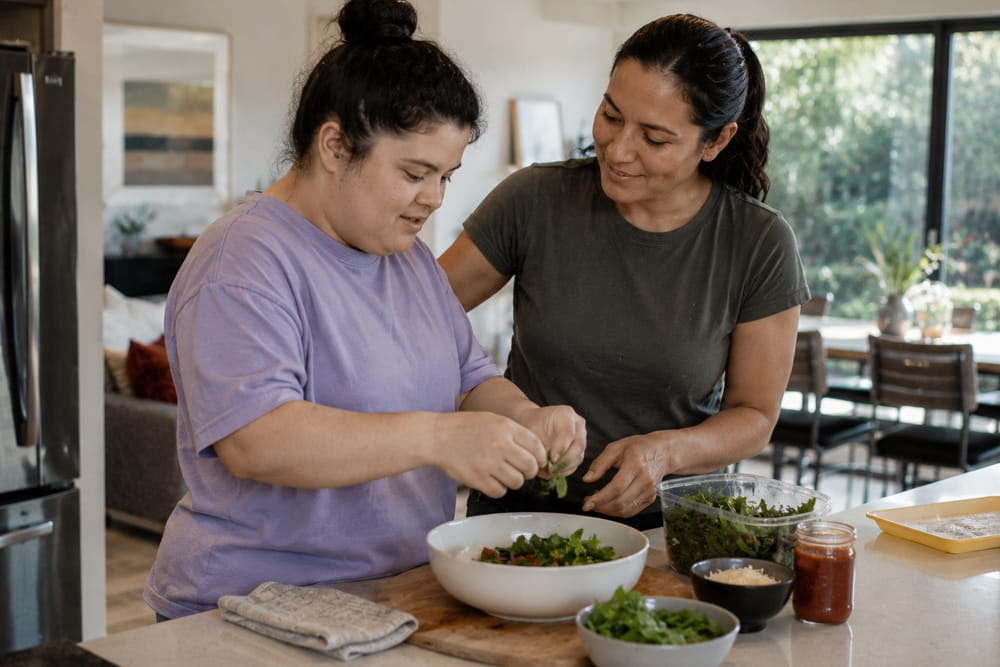
Some autistic people need more hands-on support to move through daily life safely, comfortably, and with meaningful choice.
A person may need close supervision in the community, frequent prompting during self-care routines, help communicating basic needs, or steady support during changes and periods of overload. Others may have several needs that overlap, making everyday routines harder to plan and manage.
Needing more support does not reduce a person’s strengths, preferences, dignity, or right to be included in decisions.
Alasi provides practical, nonmedical in-home and community support for autistic children, teens, adults, and aging adults with higher or more complex support needs throughout San Diego County. Our Autism Independence Specialists work alongside each person and their family to make daily routines safer, more predictable, and more accessible.
The goal is not to change the person or force independence before they are ready. It is to provide the right level of support while creating opportunities for communication, participation, and choice.
What Do Higher and Complex Support Needs Mean?
“Higher-support needs” can describe someone who needs frequent, direct, or ongoing help with daily activities.
“Complex needs” may describe a situation where several support needs happen at the same time. These may involve communication, safety awareness, sensory regulation, personal care, transitions, mobility, or participation in home and community life.
These terms do not define the person. They help describe the type and level of support that may be useful.
Someone may need help with:
- Personal hygiene and dressing routines
- Meal and snack preparation
- Moving safely through the home
- Staying safe during community outings
- Communicating pain, discomfort, choices, or needs
- Using an AAC device or another communication method
- Following a daily schedule
- Transitioning between activities
- Managing sensory overload
- Recognizing when a break is needed
- Returning to a routine after becoming overwhelmed
- Staying near a trusted support person
- Participating in family and community activities
- Adapting when plans, caregivers, or environments change
- Maintaining familiar routines as they grow older
Support needs may also change from day to day. A person may be independent on one day and need close guidance on another.
Alasi responds to the person in front of us, not only to a label or written plan.
Autism-Only Support
Many home care agencies serve a wide range of people and may have limited autism-specific experience.
Alasi focuses exclusively on autism.
This means every caregiver, support process, and service is designed around the different ways autistic people may communicate, learn, move, regulate, and experience their environment.
Our Autism Independence Specialists understand that:
- A person may understand more than they can express
- Spoken language may not be the person’s main communication method
- A delayed response may reflect processing time
- Movement or repetition may support regulation
- Sudden changes may create significant stress
- Sensory discomfort may affect participation
- Each person learns in a unique way may be confusing or overwhelming
- A person may need support without wanting others to take control
- Behavior may communicate a need, boundary, discomfort, or request
We do not assume that a person with higher support needs is unable to make choices.
Choice may be expressed through speech, gestures, body movement, pictures, signs, writing, eye gaze, an AAC device, or another reliable method. Our specialists take time to learn how each individual communicates yes, no, comfort, discomfort, interest, and the need for help.
Support Where Daily Life Happens
Skills are often easier to understand when they are supported in the actual place where they will be used.
Alasi provides support in the person’s home and community. This allows routines to be built around familiar rooms, belongings, appliances, family members, neighborhood routes, and daily schedules.
In-home support may include:
- Following morning and bedtime routines
- Preparing for school, work, or a day program
- Supporting bathing, grooming, and dressing routines
- Preparing meals with the person’s preferred level of participation
- Organizing personal items
- Supporting safe movement through the home
- Practicing household safety
- Using visual schedules and task steps
- Preparing for appointments or outings
- Creating predictable transitions
- Supporting rest, movement, and regulation
- Communicating with family members about the day
- Practicing how to request help, space, or a break
The person may take an active role in some parts of a routine and need full support with others.
Participation is not all or nothing. Choosing an item, completing one step, holding a needed object, activating a communication device, or showing a preference can all be meaningful forms of involvement.
Personalized Support for Learning and Skill Development
Prompting means providing a reminder or form of help that supports someone in beginning or completing an activity.
A prompt may be:
- A spoken reminder
- A written step
- A picture
- A gesture
- An item placed in view
- A timer
- A demonstration
- A familiar routine
- A choice between two options
- Calm guidance through one step at a time
Alasi uses prompting carefully and respectfully. The goal is to make an activity more understandable, not to create pressure or demand immediate compliance.
Whenever possible, specialists give the person time to process and respond. Support may be adjusted based on the difficulty of the task, the preference of the task, and the support required at that moment
Regulation Support During Difficult Moments
Stress, sensory overload, fatigue, pain, communication barriers, and unexpected change can make daily activities harder.
Alasi provides nonmedical regulation support to help a person move through these moments with safety and dignity.
Support may include:
- Reducing noise, light, or activity when possible
- Giving the person more physical space
- Using fewer words
- Offering access to a preferred object or activity
- Supporting movement
- Providing a quiet break
- Following an established calming routine
- Using familiar visual supports
- Pausing a nonurgent task
- Helping the person communicate what they need
- Giving clear information about what will happen next
- Supporting a gradual return to the routine
Regulation support is not about stopping harmless autistic traits or making someone appear calm for the comfort of others.
It is about understanding what may be overwhelming and helping the person access the support that works for them.
Safety Supervision With Respect
Some autistic people may need close supervision at home or in the community because of limited safety awareness, communication barriers, impulsive movement, or difficulty responding to unexpected situations.
Safety supervision may include:
- Staying close during neighborhood walks
- Supporting safe street crossing
- Monitoring the use of kitchen tools or appliances
- Preparing for doors, gates, stairs, and outdoor areas
- Helping the person remain with the group during outings
- Carrying emergency contact information
- Supporting communication with trusted community workers
- Using agreed-upon safety routines
- Preparing for transportation changes
- Recognizing early signs of stress
- Helping the person leave an unsafe or overwhelming setting
Safety support should not remove the person’s voice.
Our specialists continue to offer choices, explain what is happening, and respect communication and boundaries whenever possible. The right level of supervision is based on the individual’s needs, support plan, and family guidance.
Alasi does not promise to remove all risk. We provide practical supervision and skill-building designed to support safer participation.
Talk to our teamCommunication Support for People With Limited Speech
A person does not need to speak to have something important to say.
Some autistic people use little or no spoken language. Others may speak but lose access to words during stress, fatigue, or sensory overload.
Alasi respects all reliable forms of communication.
Our specialists may support the use of:
- AAC devices
- Picture systems
- Written choices
- Sign language
- Gestures
- Body movement
- Yes-and-no responses
- Visual schedules
- Communication cards
- Familiar phrases or scripts
- Preferred objects that represent an activity or need
We do not present this service as speech therapy. When a speech-language pathologist has recommended a communication strategy, Alasi may help the person practice using it during daily home and community routines, when authorized.
Our role is to support practical communication, make space for responses, and help ensure that the person’s choices and boundaries are taken seriously.
Supporting Children With Higher Needs
Children with higher support needs may require close guidance during self-care, family routines, community activities, and transitions.
Alasi may help a child:
- Take part in getting dressed
- Communicate basic choices
- Follow a familiar morning routine
- Prepare for school
- Practice safe movement at home
- Participate in meals
- Use a preferred communication system
- Request a break
- Move between activities
- Join family or community activities
- Build comfort with a new routine
- Return to a familiar activity after overload
Support remains age-appropriate and strengths-based.
A child should not be defined only by the tasks they cannot yet complete. Our specialists notice communication, interests, connection, effort, and the many ways a child already participates in family life.
Support for Teens and Adults
As autistic people grow older, higher support needs do not disappear simply because childhood services end.
Teens and adults may need ongoing assistance with:
- Personal-care routines
- Household participation
- Meal preparation
- Transportation
- Community safety
- Communication
- Appointments
- Work or program routines
- Recreation
- Family responsibilities
- Changes in living arrangements
- Building relationships with new support people
Autistic adults should be spoken to directly and included in decisions about their care.
You may want family members involved in some areas and more privacy in others. You may prefer certain routines, caregivers, communication methods, or community activities. These preferences matter.
Alasi supports adults in building practical independence while respecting the reality that some people will continue to need significant assistance throughout life.
Supporting Aging Autistic Adults
Aging autistic adults with higher support needs are often overlooked by traditional home care services.
An older autistic adult may have relied on familiar routines and family caregivers for many years. Changes in health, energy, mobility, communication, housing, or family availability may make additional support necessary.
Alasi may help with:
- Maintaining familiar daily routines
- Supporting personal care
- Preparing meals
- Organizing the home
- Attending community activities
- Preparing for appointments
- Communicating changes in comfort or needs
- Updating safety routines
- Building trust with new caregivers
- Supporting family transitions
- Preserving meaningful hobbies
- Staying connected to familiar people and places
Our support remains nonmedical. Medical concerns and clinical recommendations should be addressed by the appropriate licensed professional.
The goal is to help aging autistic adults remain involved in their own lives with dignity, familiarity, and as much choice as possible.
Working Alongside Families
Families supporting someone with higher or complex needs may carry a great deal of daily responsibility.
Parents, siblings, partners, and other caregivers may manage personal care, appointments, communication, routines, transportation, and safety. They may also be planning for future changes while trying to meet immediate needs.
Alasi works alongside families.
Our specialists may help create greater consistency by:
- Following established routines
- Learning the person’s communication
- Using agreed-upon prompts
- Supporting skill practice
- Providing updates about daily participation
- Helping prepare for changes
- Maintaining safety routines
- Supporting community access
- Identifying what helped during a difficult moment
- Respecting family culture and priorities
- Encouraging the person’s choice and participation
- Building trust over time
Our goal is not to replace family knowledge. It is to add dependable, autism-specific support to the person’s existing circle of care.
Collaboration With Licensed Professionals
A person with higher or complex support needs may also receive services from licensed professionals and community teams.
When appropriate and authorized, Alasi may collaborate with the person’s:
- BCBA
- Occupational therapist
- Speech-language pathologist
- Physician
- School team
- Regional Center team
- Other licensed professionals
This may help support consistency across home, school, community, and professional services.
Alasi’s Higher-Support and Complex-Needs Services are not ABA therapy, psychotherapy, occupational therapy, speech therapy, physical therapy, medical care, or clinical behavioral-health treatment.
Our Autism Independence Specialists provide practical, nonmedical independence support, prompting, skill practice, regulation support, community participation, safety supervision, and family communication.
Higher-Support Autism Services Across San Diego County
Alasi serves autistic people and families throughout San Diego County, including Chula Vista, North County, La Jolla, Carmel Valley, East County, and surrounding communities.
Because services take place at home and in familiar neighborhoods, support can reflect the person’s actual environment, household routines, family relationships, school or adult program schedule, and preferred community activities.
Every support plan begins by understanding the person, not simply the level of assistance they need.
How Alasi Can Help
Alasi can help autistic children, teens, adults, and aging adults with higher or complex support needs take part in daily life with greater safety, comfort, communication, and choice. Our Autism Independence Specialists provide personalized, nonmedical help with personal routines, prompting, regulation, community participation, safety supervision, practical skill-building, and family communication throughout San Diego County. Through an autism-only approach delivered in the person’s real home and community, Alasi helps families create dependable support while honoring each individual’s strengths, dignity, preferences, and potential for meaningful independence.
Contact us